Introduction
In today’s competitive marketplace, businesses can no longer rely solely on product quality or pricing to attract and retain customers. Consumers now expect personalized interactions, fast responses, seamless digital experiences and meaningful relationships with brands. As a result, Customer Experience (CX) has become one of the most important factors influencing business success.
Customer Experience refers to the overall perception a customer develops through every interaction with a business—from discovering a brand online to purchasing a product and receiving after-sales support. A positive customer experience can increase customer satisfaction, loyalty, referrals and long-term profitability. On the other hand, poor experiences can quickly drive customers to competitors.
Modern marketing is no longer just about promoting products or services; it is about creating exceptional experiences that build trust and long-lasting customer relationships. This article explores the importance of Customer Experience (CX), its impact on marketing performance, key components, challenges and strategies for improvement.
What Is Customer Experience (CX)?
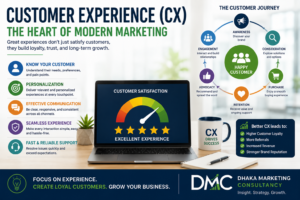
Customer Experience (CX) refers to the complete journey a customer has with a brand across all touch-points and channels.
These touch-points may include:
- Company website
- Social media platforms
- Online advertisements
- Customer service interactions
- Sales consultations
- Product delivery
- After-sales support
- Email communications
Every interaction contributes to how customers perceive a business.
Customer Experience is not limited to customer service alone. Instead, it encompasses every stage of the customer journey before, during and after a purchase.
Why Customer Experience Matters in Modern Marketing
1. Customers Have More Choices Than Ever
Digital technology has made it easier for customers to compare products, services and prices across multiple brands.
When products are similar, customer experience often becomes the deciding factor.
Businesses that deliver superior experiences gain a competitive advantage.
2. Customer Expectations Continue to Rise
Modern consumers expect:
- Quick responses
- Personalized communication
- Convenient online experiences
- Transparent information
- Consistent service quality
Businesses that fail to meet these expectations risk losing customers.
3. Positive Experiences Build Customer Loyalty
Satisfied customers are more likely to:
- Make repeat purchases
- Recommend the business to others
- Leave positive reviews
- Become long-term brand advocates
Customer loyalty significantly reduces marketing and customer acquisition costs.
4. Better Customer Experience Increases Revenue
Research consistently shows that organizations providing exceptional customer experiences often achieve:
- Higher customer retention
- Increased average purchase value
- Greater customer lifetime value
- Stronger profitability
Investing in CX is therefore an investment in business growth.
The Relationship Between Customer Experience and Marketing
Marketing and customer experience are closely connected.
Traditional marketing focused primarily on attracting customers.
Modern marketing focuses on:
- Attracting customers
- Engaging customers
- Retaining customers
- Creating memorable experiences
A successful marketing campaign should not only generate leads but also ensure customers enjoy every interaction with the brand.
When marketing promises align with actual customer experiences, trust and credibility increase.
Key Components of Excellent Customer Experience
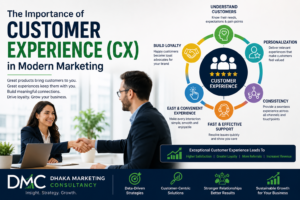
Understanding Customer Needs
Businesses must understand:
- Customer preferences
- Pain points
- Expectations
- Buying behavior
Market research plays a critical role in gathering these insights.
Personalization
Customers appreciate experiences tailored to their needs.
Examples include:
- Personalized email recommendations
- Customized offers
- Relevant content suggestions
- Personalized customer support
Personalization improves engagement and satisfaction.
Consistency Across Channels
Customers interact with brands through multiple channels.
A consistent experience should be maintained across:
- Websites
- Social media
- Mobile apps
- Customer service channels
- Physical locations
Consistency strengthens brand trust.
Fast and Effective Customer Support
Responsive customer support significantly impacts customer satisfaction.
Customers expect:
- Quick issue resolution
- Professional communication
- Helpful assistance
- Easy access to support
Excellent customer service often turns dissatisfied customers into loyal advocates.
User-Friendly Digital Experience
A business website should be:
- Easy to navigate
- Mobile-friendly
- Fast-loading
- Secure
- Informative
Poor website experiences can negatively impact conversions and customer satisfaction.
Benefits of Strong Customer Experience
Improved Customer Retention
Retaining existing customers is often more cost-effective than acquiring new ones.
Businesses with strong CX strategies typically experience higher retention rates.
Increased Word-of-Mouth Marketing
Happy customers naturally share positive experiences with friends, family, and colleagues.
This creates valuable organic marketing opportunities.
Higher Customer Lifetime Value
Satisfied customers tend to:
- Purchase more frequently
- Spend more money
- Stay loyal longer
This increases overall customer lifetime value.
Stronger Brand Reputation
Positive customer experiences contribute to:
- Better online reviews
- Stronger brand image
- Greater customer trust
Reputation is one of the most valuable assets a business can possess.
Common Customer Experience Challenges
Inconsistent Communication
Different departments may communicate differently, creating confusion for customers.
Lack of Customer Data
Without proper customer insights, businesses struggle to personalize experiences.
Slow Response Times
Delayed responses can frustrate customers and damage relationships.
Poor Digital Experiences
Complicated websites, slow loading times, and difficult navigation negatively affect customer satisfaction.
Ignoring Customer Feedback
Businesses that fail to listen to customer feedback often miss opportunities for improvement.
How Businesses Can Improve Customer Experience
Conduct Regular Customer Research
Understanding customer expectations helps businesses make informed decisions.
Methods include:
- Surveys
- Interviews
- Feedback forms
- Social media monitoring
Map the Customer Journey
Customer journey mapping helps identify areas where improvements can be made.
Businesses should evaluate every stage of customer interaction.
Invest in Employee Training
Employees play a critical role in delivering exceptional experiences.
Training should focus on:
- Communication skills
- Problem-solving abilities
- Customer service excellence
Utilize Customer Feedback
Customer feedback provides valuable insights into strengths and weaknesses.
Regular analysis can guide service improvements.
Leverage Technology
Modern tools such as:
- CRM systems
- Marketing automation platforms
- Customer support software
- Analytics tools
help businesses better understand and serve customers.
The Role of Customer Experience in Digital Marketing
Customer Experience directly influences digital marketing performance.
A positive experience can improve:
- Website conversions
- Lead generation
- Social media engagement
- Search engine rankings
- Email marketing performance
Businesses that prioritize customer experience often achieve better marketing ROI and stronger long-term growth.
How Dhaka Marketing Consultancy (DMC) Supports Customer Experience Improvement
At Dhaka Marketing Consultancy (DMC), we recognize that customer experience is a critical driver of business success.
Our services help organizations:
- Understand customer behavior
- Conduct market research
- Analyze customer expectations
- Improve digital experiences
- Develop customer-focused marketing strategies
- Strengthen customer retention initiatives
Through data-driven insights and strategic marketing solutions, DMC helps businesses create meaningful customer experiences that support sustainable growth.
Conclusion
Customer Experience (CX) has become one of the most powerful factors influencing business success in the modern marketplace. Customers today expect more than quality products—they expect seamless, personalized and valuable experiences throughout their journey.
Businesses that prioritize customer experience can achieve higher customer satisfaction, stronger loyalty, increased profitability and sustainable competitive advantages.
Modern marketing is no longer just about selling products; it is about building relationships, creating trust, and delivering exceptional experiences at every touch-point.
Organizations that invest in Customer Experience today will be better positioned to grow, compete and succeed in the future.