Introduction
Customer satisfaction is one of the most important indicators of business success. Regardless of industry, businesses that understand and meet customer expectations are more likely to retain customers, build loyalty, generate positive referrals and achieve sustainable growth. However, understanding customer satisfaction requires more than assumptions—it requires reliable customer feedback.
One of the most effective ways to gather customer feedback is through customer satisfaction surveys. These surveys provide valuable insights into customer experiences, preferences, expectations and areas for improvement. When designed and conducted properly, customer satisfaction surveys help businesses make informed decisions that improve products, services and overall customer relationships.
This article explains the importance of customer satisfaction surveys, the steps involved in conducting effective surveys, common mistakes to avoid and how businesses can use survey results to drive growth and customer loyalty.
What is a Customer Satisfaction Survey?
A customer satisfaction survey is a research tool used to collect feedback from customers regarding their experiences with a company’s products, services, support or overall business performance.
The primary objectives of customer satisfaction surveys are to:
- Measure customer satisfaction levels
- Identify strengths and weaknesses
- Understand customer expectations
- Improve customer experiences
- Increase customer retention
- Support business decision-making
Customer satisfaction surveys can be conducted online, by phone, through email, face-to-face interviews or via mobile applications.
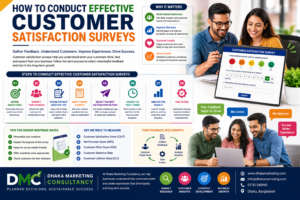
Why Customer Satisfaction Surveys Matter
Understanding Customer Needs
Customer satisfaction surveys help businesses understand what customers value most and what improvements they expect.
Improving Products and Services
Feedback often reveals opportunities to improve quality, features and customer support.
Increasing Customer Retention
Satisfied customers are more likely to remain loyal and continue purchasing from a business.
Enhancing Customer Experience
Survey insights help businesses identify pain points and improve the customer journey.
Supporting Business Growth
Organizations that continuously improve customer satisfaction often achieve stronger financial performance and sustainable growth.
Benefits of Conducting Customer Satisfaction Surveys
Improved Customer Loyalty
Customers appreciate businesses that listen to their opinions and act on their feedback.
Better Decision-Making
Survey data provides evidence-based insights that support strategic decisions.
Stronger Brand Reputation
Organizations that prioritize customer satisfaction often earn higher levels of trust and credibility.
Competitive Advantage
Understanding customer expectations helps businesses differentiate themselves from competitors.
Higher Customer Lifetime Value
Satisfied customers tend to purchase more frequently and remain customers longer.
Step 1: Define Clear Survey Objectives
Before creating a survey, businesses should determine exactly what they want to learn.
Common objectives include:
- Measuring overall satisfaction
- Evaluating customer service quality
- Assessing product performance
- Understanding customer expectations
- Identifying improvement opportunities
Clear objectives ensure that surveys remain focused and generate meaningful results.
Example Objective
A marketing consultancy may want to evaluate:
- Client satisfaction with marketing plans
- Quality of research reports
- Communication effectiveness
- Overall service experience
Step 2: Identify the Target Audience
The effectiveness of a survey depends on collecting feedback from the right people.
Possible survey audiences include:
- Existing customers
- New customers
- Repeat customers
- Former customers
- Business clients
Selecting the appropriate audience improves the accuracy and relevance of survey results.
Step 3: Choose the Right Survey Method
Businesses can use various methods to collect customer feedback.
Online Surveys
Popular platforms include:
- Google Forms
- Survey-monkey
- Type-form
Advantages:
- Cost-effective
- Easy distribution
- Fast data collection
Email Surveys
Businesses can send surveys directly to customers after purchases or service interactions.
Phone Surveys
Useful for gathering detailed responses and clarifying customer opinions.
Face-to-Face Surveys
Often used in retail stores, events or service centers.
Mobile Surveys
Increasingly popular due to widespread smartphone usage.
Step 4: Design Clear and Simple Questions
Survey questions should be easy to understand and answer.
Avoid:
- Complex language
- Technical jargon
- Leading questions
- Double-barreled questions
Good Example
“How satisfied are you with our customer service?”
Poor Example
“Do you think our excellent customer service and fast delivery exceeded your expectations?”
Simple questions generate more accurate responses.
Step 5: Use a Mix of Question Types
Different question formats provide different types of insights.
Rating Scale Questions
Example:
“Rate your overall satisfaction from 1 to 5.”
Multiple Choice Questions
Example:
“Which service did you use?”
Yes/No Questions
Example:
“Would you recommend our business to others?”
Open-Ended Questions
Example:
“What improvements would you like to see?”
Open-ended questions often reveal valuable insights that structured questions may miss.
Step 6: Keep Surveys Short and Focused
Customers are more likely to complete shorter surveys.
Best practices include:
- Limiting survey length
- Asking only relevant questions
- Focusing on key objectives
Most customer satisfaction surveys should take no more than 5–10 minutes to complete.
Short surveys generally produce higher response rates.
Step 7: Measure Key Customer Satisfaction Metrics
Several important metrics can help businesses evaluate customer satisfaction.
Customer Satisfaction Score (CSAT)
Measures overall customer satisfaction.
Example Question:
“How satisfied were you with our service?”
Net Promoter Score (NPS)
Measures customer loyalty.
Example Question:
“How likely are you to recommend our business to others?”
Customer Effort Score (CES)
Measures how easy it is for customers to interact with a business.
Example Question:
“How easy was it to resolve your issue?”
These metrics provide valuable benchmarks for performance evaluation.
Step 8: Encourage Honest Feedback
Customers should feel comfortable providing honest opinions.
Businesses can encourage openness by:
- Ensuring confidentiality
- Avoiding pressure
- Explaining survey purposes
- Demonstrating commitment to improvement
Honest feedback produces more useful and actionable insights.
Step 9: Analyze Survey Results
Collecting data is only the first step.
Businesses should carefully analyze:
- Satisfaction trends
- Common complaints
- Positive feedback
- Service gaps
- Improvement opportunities
Data analysis helps organizations identify priorities and develop improvement plans.
Step 10: Take Action Based on Feedback
One of the biggest mistakes businesses make is collecting feedback without acting on it.
Customers expect their opinions to lead to improvements.
Businesses should:
- Address recurring issues
- Improve weak areas
- Enhance customer experiences
- Communicate improvements to customers
Taking action demonstrates that customer feedback is valued.
Common Mistakes to Avoid
Asking Too Many Questions
Long surveys often lead to lower completion rates.
Using Biased Questions
Questions should remain neutral and objective.
Ignoring Customer Feedback
Collecting feedback without action can damage customer trust.
Surveying Too Frequently
Excessive surveys may frustrate customers and reduce participation.
Failing to Follow Up
Businesses should communicate how feedback is being used to improve services.
Best Practices for Effective Customer Satisfaction Surveys
To maximize survey effectiveness:
- Define clear objectives
- Target the right audience
- Use simple language
- Keep surveys concise
- Include both quantitative and qualitative questions
- Analyze results carefully
- Act on customer feedback
- Continuously monitor satisfaction levels
Following these practices helps businesses obtain more reliable and actionable insights.
How Dhaka Marketing Consultancy Supports Customer Satisfaction Research
At Dhaka Marketing Consultancy, we help businesses understand customer needs and improve customer experiences through professional research and marketing solutions.
Our services include:
- Customer Satisfaction Surveys
- Market Research
- Customer Behavior Analysis
- Customer Experience (CX) Studies
- Competitor Analysis
- Business Growth Consulting
- Marketing Strategy Development
- Data-Driven Decision Support
We help organizations transform customer feedback into practical business improvements and sustainable growth opportunities.
Conclusion
Customer satisfaction surveys are powerful tools for understanding customer experiences, identifying improvement opportunities and strengthening customer relationships. Businesses that regularly collect and act on customer feedback are better positioned to improve satisfaction, increase loyalty and achieve long-term success.
Effective customer satisfaction surveys require clear objectives, thoughtful question design, appropriate data collection method and a commitment to acting on survey results. When used properly, customer feedback becomes a valuable source of insight that supports continuous improvement and business growth.
Organizations that listen to their customers and respond proactively to their needs are more likely to build strong brands, maintain loyal customer bases and achieve sustainable success in today’s competitive marketplace.
Dhaka Marketing Consultancy helps businesses design, conduct, and analyze customer satisfaction surveys that provide meaningful insights and support informed marketing decisions for long-term growth.