Introduction
In today’s highly competitive business environment, companies face the challenge of serving diverse customer groups with different needs, preferences and purchasing behaviors. Attempting to market products or services to everyone often leads to wasted resources and ineffective campaigns. This is where market segmentation becomes a critical marketing strategy.
Market segmentation is the process of dividing a broad market into smaller, clearly defined groups of customers who share similar characteristics. By understanding these segments, businesses can develop targeted marketing strategies that improve customer satisfaction, increase profitability and support sustainable business growth.
For organizations aiming to build long-term success, market segmentation is no longer optional—it is essential. This article explores the importance of market segmentation, key segmentation strategies, benefits, implementation processes and how businesses can use segmentation to achieve sustainable growth.
What is Market Segmentation?
Market segmentation is the practice of dividing a target market into distinct groups based on shared characteristics such as demographics, geographic location, behavior, interests or purchasing patterns.
Instead of treating all customers the same, businesses identify specific customer groups and tailor their products, services and marketing efforts accordingly.
Example
A marketing consultancy firm may serve:
- Small business owners
- Startups
- Manufacturing companies
- Real estate firms
- Educational institutions
- Healthcare organizations
Each segment has different marketing challenges and requires different solutions.
Why Market Segmentation Matters
Effective market segmentation helps businesses:
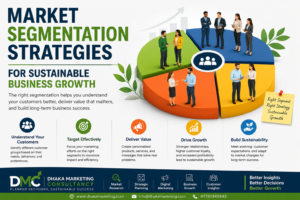
1. Understand Customer Needs
Different customers have different expectations. Segmentation enables companies to better understand these needs and deliver personalized solutions.
2. Improve Marketing Efficiency
Marketing budgets are often limited. Targeting the right audience reduces wasted advertising expenses and increases campaign effectiveness.
3. Increase Customer Satisfaction
Customers respond more positively when products, services and messages address their specific needs.
4. Strengthen Competitive Advantage
Businesses that understand their target segments can create unique value propositions that competitors may struggle to replicate.
5. Support Sustainable Growth
By focusing on profitable customer groups, organizations can achieve consistent revenue growth and long-term business stability.
Major Types of Market Segmentation
1. Demographic Segmentation
Demographic segmentation divides customers based on measurable characteristics.
Common demographic factors include:
- Age
- Gender
- Income
- Education
- Occupation
- Family size
- Marital status
Example
A digital marketing agency may offer:
- Affordable packages for startups
- Premium consulting services for large corporations
based on income and business size.
2. Geographic Segmentation
Geographic segmentation categorizes customers according to location.
Examples include:
- Country
- Region
- City
- Climate
- Urban or rural areas
Example
A consultancy firm in Bangladesh may develop separate strategies for:
- Dhaka-based businesses
- Chattogram-based businesses
- Regional SMEs
because market conditions differ significantly across locations.
3. Psycho-graphic Segmentation
Psycho-graphic segmentation focuses on customer lifestyles, values, attitudes, interests, and personalities.
This approach helps businesses understand why customers make purchasing decisions.
Example
Some customers prioritize:
- Innovation
- Sustainability
- Luxury
- Convenience
- Cost savings
Marketing messages can be customized accordingly.
4. Behavioral Segmentation
Behavioral segmentation analyzes customer actions and purchasing behavior.
Factors include:
- Purchase frequency
- Brand loyalty
- Product usage
- Buying habits
- Customer journey stage
Example
A business may create separate campaigns for:
- New customers
- Returning customers
- Loyal customers
- Inactive customers
5. Firmographic Segmentation (B2B Markets)
For business-to-business marketing, firmographic segmentation is particularly important.
Factors include:
- Industry type
- Company size
- Revenue level
- Number of employees
- Business model
Example
A marketing consultancy may offer different services for:
- Recruitment agencies
- Real estate firms
- Manufacturing companies
- Educational institutions
Market Segmentation Strategies for Sustainable Growth :
Strategy 1: Identify High-Value Customer Segments
Not all customer groups generate equal value.
Businesses should identify segments that:
- Generate consistent revenue
- Have long-term growth potential
- Offer strong customer retention opportunities
Focusing on high-value segments improves profitability and sustainability.
Strategy 2: Develop Customized Marketing Messages
Different segments respond to different messages.
For example:
A startup may value:
- Growth opportunities
- Cost-effective marketing
While a large corporation may prioritize:
- Brand reputation
- Market leadership
- Data-driven decision making
Tailored messaging significantly improves engagement and conversion rates.
Strategy 3: Create Segment-Specific Products and Services
Businesses can develop specialized offerings for different market segments.
Examples include:
- Basic service packages
- Standard packages
- Premium consulting solutions
This allows organizations to meet varying customer needs while maximizing revenue.
Strategy 4: Use Data and Market Research
Effective segmentation relies on accurate information.
Businesses should regularly collect data through:
- Surveys
- Interviews
- Customer feedback
- Website analytics
- Social media insights
- Market research studies
Reliable data helps identify emerging customer trends and market opportunities.
Strategy 5: Implement Personalized Customer Experiences
Customers increasingly expect personalized experiences.
Businesses can personalize:
- Email marketing
- Website content
- Advertising campaigns
- Customer support
- Product recommendations
Personalization improves customer loyalty and long-term relationships.
Strategy 6: Continuously Evaluate Market Segments
Markets constantly evolve.
Customer preferences, technology, and economic conditions change over time.
Businesses should regularly review:
- Segment profitability
- Customer needs
- Competitive conditions
- Market opportunities
Continuous evaluation ensures segmentation strategies remain relevant and effective.
Benefits of Effective Market Segmentation
Organizations that successfully implement segmentation often experience :
Improved Customer Retention
Targeted solutions strengthen customer relationships and increase loyalty.
Higher Marketing ROI
Marketing resources are allocated more efficiently, generating better returns.
Better Product Development
Understanding customer needs supports the development of more relevant products and services.
Increased Revenue Growth
Businesses can focus on profitable market opportunities and improve conversion rates.
Enhanced Brand Positioning
Segmentation helps businesses establish a stronger position within specific market niches.
Common Segmentation Mistakes to Avoid
Targeting Everyone
Trying to serve all customers often results in ineffective marketing efforts.
Using Outdated Data
Customer behavior changes over time. Segmentation decisions should rely on current information.
Over-Segmentation
Creating too many segments can make marketing efforts overly complex and difficult to manage.
Ignoring Customer Feedback
Customer insights provide valuable information for refining segmentation strategies.
Failing to Monitor Results
Segmentation should be measured and optimized continuously to ensure effectiveness.
How Dhaka Marketing Consultancy Supports Market Segmentation :
At Dhaka Marketing Consultancy, we help businesses identify profitable market segments and develop targeted growth strategies through:
- Market Research
- Customer Analysis
- Competitor Analysis
- Marketing Planning
- Brand Positioning
- Customer Behavior Studies
- Business Growth Consulting
- Digital Marketing Support
Our data-driven approach enables organizations to understand their markets more effectively and achieve sustainable business growth.
Conclusion
Market segmentation is one of the most powerful tools for achieving sustainable business growth. By identifying distinct customer groups and developing targeted strategies, businesses can improve customer satisfaction, increase marketing efficiency, strengthen competitive advantage, and drive long-term profitability.
In an increasingly competitive marketplace, organizations that understand their customers and deliver personalized value will be best positioned for future success. Effective market segmentation is not simply a marketing tactic—it is a strategic foundation for sustainable business growth.
Dhaka Marketing Consultancy helps businesses transform market insights into practical growth strategies through professional market research, customer analysis, and strategic marketing solutions designed for long-term success.