Introduction
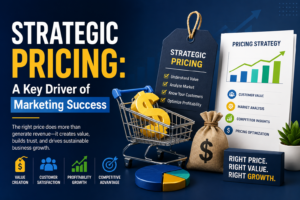
Pricing is one of the most powerful elements of marketing. While businesses often focus on product development, advertising and customer service, pricing decisions can significantly influence customer behavior, market positioning, profitability and overall business success. A well-designed pricing strategy not only determines how much revenue a company generates but also shapes customer perceptions and competitive advantage.
In today’s highly competitive marketplace, strategic pricing has become more important than ever. Customers have access to vast amounts of information, making it easier to compare prices, evaluate alternatives and make informed purchasing decisions. As a result, businesses must carefully align pricing with customer expectations, market conditions and organizational objectives.
Strategic pricing goes beyond simply calculating costs and adding a profit margin. It involves understanding customer value, market demand, competitor pricing and long-term business goals. When implemented effectively, strategic pricing can increase sales, improve profitability, strengthen brand positioning and support sustainable business growth.
This article explores the importance of strategic pricing, common pricing strategies, factors affecting pricing decisions and how businesses can use pricing as a key driver of marketing success.
What is Strategic Pricing?
Strategic pricing is the process of setting prices based on market conditions, customer perceptions, competitive dynamics and business objectives rather than solely on production costs.
It involves answering critical questions such as:
- What value does the product provide?
- How much are customers willing to pay?
- How do competitors price similar offerings?
- What pricing strategy supports long-term growth?
Strategic pricing helps businesses maximize both customer value and profitability.
Why Pricing Matters in Marketing
Pricing directly influences customer decisions and business performance.
Revenue Generation
Pricing determines how much revenue each sale generates.
Customer Perception
Customers often associate price with quality, value and credibility.
Market Positioning
Pricing helps define whether a brand is perceived as premium, affordable or value-oriented.
Competitive Advantage
Effective pricing can differentiate a business from competitors.
Profitability
Even small pricing adjustments can significantly impact profits.
Because pricing affects so many aspects of business performance, it should be considered a strategic marketing decision rather than simply a financial calculation.
The Relationship Between Pricing and Customer Value
Customers do not buy products solely because they are inexpensive. They buy products when they believe the value received exceeds the price paid.
Perceived Value
Perceived value refers to the customer’s assessment of benefits compared to cost.
Factors influencing perceived value include:
- Product quality
- Brand reputation
- Customer experience
- Convenience
- Service support
- Product features
Businesses that deliver strong value can often charge premium prices.
Strategic Pricing Objectives
Different organizations may pursue different pricing objectives.
Profit Maximization
Setting prices to maximize profitability.
Market Share Growth
Using competitive pricing to attract more customers.
Brand Positioning
Supporting premium or value-based brand strategies.
Customer Acquisition
Encouraging trial purchases and market penetration.
Customer Retention
Maintaining customer loyalty through fair and consistent pricing.
The chosen pricing objective should align with overall business goals.
Common Strategic Pricing Approaches
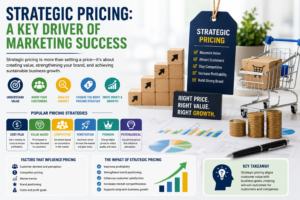
1. Cost-Plus Pricing
Cost-plus pricing involves adding a profit margin to production costs.
Example
Product Cost: $50
Desired Margin: 20%
Selling Price: $60
Advantages
- Simple to implement
- Ensures costs are covered
Limitations
- Ignores customer value
- May overlook market demand
While widely used, cost-plus pricing may not always maximize profitability.
2. Value-Based Pricing
Value-based pricing focuses on customer perceptions of value.
Rather than asking:
“What does it cost us?”
Businesses ask:
“What is it worth to customers?”
Advantages
- Higher profit potential
- Strong alignment with customer benefits
Examples
- Premium consulting services
- Luxury brands
- Specialized software solutions
Value-based pricing is often considered one of the most effective strategic pricing methods.
3. Competitive Pricing
Competitive pricing involves setting prices relative to competitors.
Businesses may choose to:
- Match competitor prices
- Price slightly lower
- Price higher with additional value
This strategy is common in highly competitive industries.
4. Penetration Pricing
Penetration pricing uses lower initial prices to enter a market and attract customers.
Objectives include:
- Rapid customer acquisition
- Increased market share
- Brand awareness
Once customer adoption increases, prices may gradually rise.
5. Premium Pricing
Premium pricing positions products as high-quality or exclusive.
Characteristics include:
- Higher prices
- Strong branding
- Superior customer experience
- Perceived prestige
Luxury brands often use premium pricing successfully.
6. Psychological Pricing
Psychological pricing leverages consumer behavior and perceptions.
Examples include:
- $99 instead of $100
- Limited-time offers
- Discount presentations
These approaches influence how customers perceive value.
Factors Influencing Pricing Decisions
Customer Demand
Demand significantly affects pricing flexibility.
High demand often supports higher prices.
Low demand may require promotional pricing.
Target Market
Different customer segments have varying price sensitivities.
Businesses should understand:
- Purchasing power
- Customer preferences
- Value expectations
Pricing should align with target market characteristics.
Competitor Actions
Competitor pricing can influence customer expectations.
Regular competitive analysis helps businesses remain relevant and competitive.
Brand Positioning
Premium brands typically charge higher prices.
Value-oriented brands often compete on affordability.
Pricing should support desired brand positioning.
Economic Conditions
Inflation, income levels, and market conditions can influence pricing strategies.
Businesses should remain adaptable to changing economic environments.
Strategic Pricing and Consumer Psychology
Pricing decisions are strongly influenced by consumer psychology.
Price as a Quality Indicator
Customers often assume higher-priced products offer better quality.
Anchoring Effect
Consumers compare prices against reference points.
Example:
A product originally priced at $200 and discounted to $150 may appear more attractive than a product consistently priced at $150.
Scarcity and Urgency
Limited-time offers can encourage faster purchasing decisions.
Social Proof
Customers may perceive popular products as offering better value.
Understanding these psychological factors helps businesses develop more effective pricing strategies.
The Role of Pricing in Marketing Success
Pricing influences multiple aspects of marketing performance.
Customer Acquisition
Competitive pricing can attract new customers.
Conversion Rates
Appropriate pricing often increases purchase likelihood.
Brand Differentiation
Pricing communicates market position and value.
Customer Retention
Fair and consistent pricing supports loyalty.
Marketing ROI
Effective pricing improves profitability and marketing efficiency.
Organizations that integrate pricing into their marketing strategy often achieve stronger results.
Measuring Pricing Effectiveness
Businesses should continuously evaluate pricing performance.
Key metrics include:
Revenue Growth
Measures overall sales performance.
Profit Margins
Evaluates profitability.
Conversion Rates
Tracks customer purchase behavior.
Customer Retention
Measures loyalty and repeat purchases.
Market Share
Assesses competitive performance.
Customer Satisfaction
Evaluates customer perceptions of value.
Regular monitoring supports ongoing optimization.
Common Pricing Mistakes to Avoid
Competing Only on Price
Constantly lowering prices may reduce profitability and damage brand value.
Ignoring Customer Value
Customers care about benefits, not just cost.
Failing to Monitor Competitors
Competitive environments require ongoing analysis.
Using a One-Size-Fits-All Approach
Different customer segments may require different pricing strategies.
Neglecting Market Research
Research helps businesses understand customer expectations and pricing opportunities.
Avoiding these mistakes improves long-term performance.
How Technology Supports Strategic Pricing
Modern technology enhances pricing decisions.
Data Analytics
Provides insights into customer behavior and purchasing patterns.
Customer Relationship Management (CRM)
Helps businesses understand customer value.
Artificial Intelligence (AI)
Supports demand forecasting and dynamic pricing.
Market Research Tools
Provide competitive and customer insights.
Technology enables more informed and responsive pricing strategies.
Strategic Pricing and Sustainable Business Growth
Strategic pricing contributes directly to long-term growth.
Benefits include:
- Improved profitability
- Better customer relationships
- Stronger brand positioning
- Increased market competitiveness
- Sustainable revenue generation
Businesses that treat pricing as a strategic marketing tool are often better positioned for success.
Conclusion
Strategic pricing is far more than a financial decision—it is a critical component of marketing success. Effective pricing influences customer perceptions, purchasing behavior, brand positioning, profitability and competitive advantage.
By understanding customer value, analyzing market conditions, considering consumer psychology, and aligning pricing with business objectives, organizations can create pricing strategies that support both short-term performance and long-term growth.
In an increasingly competitive marketplace, businesses that approach pricing strategically are better equipped to attract customers, maximize value, strengthen market position and achieve sustainable success. Pricing should not be viewed simply as a number; it should be recognized as one of the most powerful tools available for driving marketing effectiveness and business growth.