Introduction
Why do customers choose one product over another, even when both offer similar features and prices? Why do some advertisements instantly attract attention while others are ignored? The answer often lies in consumer psychology.
Consumer psychology is the study of how thoughts, emotions, beliefs, perception and social influences affect purchasing decisions. Understanding consumer psychology helps businesses create more effective marketing strategies, improve customer experiences and increase sales. In today’s highly competitive marketplace, successful marketing is no longer just about promoting products; it is about understanding how customers think and why they make certain buying decisions.
Every purchase decision is influenced by a combination of rational and emotional factors. Consumers may compare prices and product features but they are also influenced by feelings, social approval, personal values and brand perceptions. Businesses that understand these psychological influences can communicate more effectively with customers and build stronger relationships.
This article explores the impact of consumer psychology on purchasing decisions, the key psychological factors involved and how businesses can apply these insights to improve marketing performance and business growth.
What is Consumer Psychology?
Consumer psychology refers to the study of how individuals make decisions regarding the purchase, use, and disposal of products and services.
It examines:
- Customer motivations
- Perceptions
- Emotions
- Attitudes
- Beliefs
- Social influences
- Decision-making processes
The primary goal is to understand why consumers behave the way they do and how businesses can better meet their needs.
Why Consumer Psychology Matters in Marketing
Understanding consumer psychology allows businesses to:
- Predict customer behavior
- Improve marketing effectiveness
- Increase customer satisfaction
- Build stronger brands
- Enhance customer loyalty
- Improve conversion rates
Marketing strategies based on psychological insights are often more successful because they align with how customers naturally think and behave.
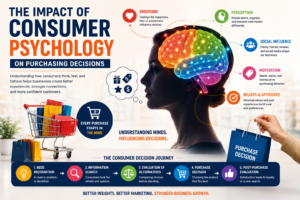
The Consumer Decision-Making Process
Before making a purchase, consumers typically go through several stages.
1. Problem Recognition
The customer realizes a need or problem.
Examples:
- A smartphone stops working.
- A business needs more customers.
- A family requires a larger vehicle.
Marketing often helps customers recognize these needs.
2. Information Search
Consumers gather information from various sources.
These may include:
- Google searches
- Social media
- Friends and family
- Product reviews
- Company websites
Businesses must provide useful and trustworthy information during this stage.
3. Evaluation of Alternatives
Customers compare available options.
Factors may include:
- Price
- Quality
- Features
- Brand reputation
- Customer reviews
Psychological perceptions often influence this evaluation process.
4. Purchase Decision
The customer selects a product or service.
However, final decisions may still be influenced by:
- Discounts
- Promotions
- Social proof
- Convenience
- Emotional factors
5. Post-Purchase Evaluation
After purchasing, customers assess whether the product met expectations.
Positive experiences often lead to:
- Repeat purchases
- Customer loyalty
- Referrals
Negative experiences may result in dissatisfaction and customer loss.
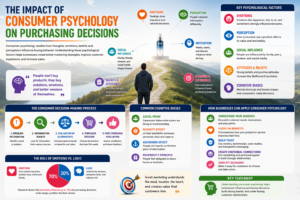
Key Psychological Factors Influencing Purchasing Decisions
1. Motivation
Motivation is one of the strongest drivers of consumer behavior.
People purchase products to satisfy needs and desires.
Common motivations include:
- Safety
- Comfort
- Status
- Convenience
- Achievement
- Belonging
Businesses that understand customer motivations can create more compelling marketing messages.
2. Perception
Perception refers to how consumers interpret information and experiences.
Different customers may perceive the same product differently.
Factors influencing perception include:
- Branding
- Packaging
- Advertising
- Product presentation
- Previous experiences
Strong brands often create positive perceptions that influence purchasing decisions.
3. Emotions
Many purchasing decisions are driven by emotions rather than logic alone.
Common emotional influences include:
- Happiness
- Excitement
- Trust
- Fear
- Pride
- Security
For example:
Luxury products often appeal to feelings of status and achievement, while insurance products may appeal to security and protection.
Emotional connections often strengthen customer loyalty.
4. Attitudes and Beliefs
Consumers develop attitudes and beliefs based on experiences, education, and cultural influences.
Positive attitudes toward a brand increase the likelihood of purchase.
Businesses can influence attitudes through:
- Consistent messaging
- Positive customer experiences
- Quality products
- Trust-building activities
5. Learning and Experience
Past experiences significantly affect future purchasing behavior.
Positive experiences often encourage repeat purchases.
Negative experiences may discourage future engagement.
Businesses that consistently deliver value create positive learning experiences that support customer retention.
The Role of Social Influences
Consumers are heavily influenced by people around them.
Family Influence
Family members often influence purchasing decisions, especially for:
- Household products
- Educational services
- Vehicles
- Financial decisions
Friends and Peers
Recommendations from friends and colleagues are often highly trusted.
Word-of-mouth marketing remains one of the most powerful marketing tools.
Social Media Influence
Social media platforms significantly affect consumer behavior.
Customers frequently rely on:
- Reviews
- Influencers
- User-generated content
- Online communities
Positive online engagement can strongly influence purchasing decisions.
Cognitive Biases That Affect Consumer Behavior
Consumers do not always make perfectly rational decisions.
Several psychological biases influence purchasing behavior.
Social Proof
People often follow the actions of others.
Examples include:
- Customer reviews
- Testimonials
- Popular products
- Best-seller labels
Consumers frequently assume that popular choices are safer choices.
Scarcity Effect
People place greater value on products that appear limited.
Examples:
- Limited-time offers
- Exclusive products
- Limited stock availability
Scarcity creates urgency and encourages faster purchasing decisions.
Anchoring Effect
Consumers often rely heavily on the first piece of information they encounter.
Example:
A product originally priced at $500 but discounted to $350 may appear more attractive due to the higher reference price.
Reciprocity Principle
When businesses provide value first, customers often feel inclined to respond positively.
Examples include:
- Free samples
- Free consultations
- Helpful content
Reciprocity can increase trust and engagement.
Consumer Psychology and Brand Loyalty
Brand loyalty develops when customers consistently associate positive experiences and emotions with a brand.
Factors that support loyalty include:
Trust
Customers remain loyal to brands they trust.
Consistency
Consistent quality strengthens confidence.
Emotional Connection
Brands that create meaningful emotional relationships often achieve stronger loyalty.
Customer Experience
Excellent experiences encourage repeat purchases and referrals.
Understanding these factors helps businesses develop long-term customer relationships.
Consumer Psychology in Digital Marketing
Digital marketing provides powerful opportunities to apply psychological principles.
Personalized Marketing
Customers respond positively to personalized experiences.
Examples include:
- Personalized emails
- Product recommendations
- Customized offers
Personalization improves engagement and conversion rates.
Content Marketing
Educational and valuable content builds trust and credibility.
Customers are more likely to purchase from businesses that provide useful information.
Visual Appeal
Design, colors, images, and layouts influence customer perceptions.
Professional visual presentation often enhances credibility and trust.
User Experience (UX)
Easy navigation and seamless experiences improve customer satisfaction.
Complex or confusing websites often discourage purchases.
How Businesses Can Apply Consumer Psychology
Conduct Customer Research
Understanding customer motivations and behaviors is essential.
Businesses should regularly gather insights through:
- Surveys
- Interviews
- Market research
- Customer feedback
Focus on Customer Needs
Marketing messages should emphasize customer benefits rather than product features alone.
Customers care most about how products improve their lives or solve their problems.
Build Trust
Trust is one of the strongest psychological drivers of purchasing decisions.
Businesses can build trust through:
- Transparency
- Testimonials
- Case studies
- Reliable customer service
Create Emotional Connections
Stories, experiences, and meaningful messages often resonate more strongly than factual information alone.
Emotional marketing can significantly increase customer engagement.
Simplify Decision-Making
Too many choices can overwhelm customers.
Businesses should make purchasing decisions simple and clear.
Common Mistakes Businesses Make
Ignoring Customer Emotions
Focusing only on product features may overlook powerful emotional influences.
Assuming All Customers Think the Same
Different customer segments often have different motivations and preferences.
Over-complicating Marketing Messages
Simple and clear communication is usually more effective.
Neglecting Customer Experience
Poor customer experiences can damage perceptions and reduce loyalty.
Consumer Psychology and Sustainable Business Growth
Businesses that understand consumer psychology are better positioned to:
- Attract customers
- Improve conversions
- Increase retention
- Build loyalty
- Strengthen brand reputation
These outcomes contribute directly to sustainable business growth.
Rather than relying solely on promotions and discounts, organizations can create long-term value by understanding and responding to customer needs and motivations.
Conclusion
Consumer psychology plays a critical role in shaping purchasing decisions. Customers are influenced by a combination of motivations, emotions, perceptions, social influences and cognitive biases throughout the buying process. Businesses that understand these psychological factors can create more effective marketing strategies, build stronger customer relationships and improve overall performance.
By focusing on customer needs, building trust, creating emotional connections and delivering positive experiences, organizations can influence purchasing decisions more effectively and achieve sustainable growth.
In today’s customer-centered marketplace, understanding consumer psychology is not simply a marketing advantage—it is a fundamental requirement for long-term business success. Businesses that invest in understanding how customers think and behave are more likely to earn loyalty, increase profitability and maintain a strong competitive position in the market.