Introduction
Developing economies represent some of the most dynamic and rapidly evolving markets in the world. Countries across Asia, Africa, Latin America and parts of Eastern Europe are experiencing significant economic transformation driven by urbanization, technological advancement, population growth and increasing consumer demand. These developments create both substantial opportunities and unique challenges for businesses and marketers.
As economies develop, consumer preferences evolve, digital adoption increases and competition intensifies. Organizations operating in these environments must understand local market conditions, customer behavior, infrastructure limitations and economic realities to succeed. Traditional marketing approaches may not always be effective, making adaptability and innovation essential.
For businesses seeking long-term growth, developing economies offer enormous potential. However, success requires a clear understanding of the challenges and opportunities that shape these markets. This article explores the key marketing challenges and opportunities in developing economies and provides practical insights for achieving sustainable business growth.
Understanding Developing Economies
Developing economies are countries experiencing economic growth and industrialization but still facing various structural, social and economic challenges.
Common characteristics include:
- Growing populations
- Rising urbanization
- Expanding middle class
- Increasing internet usage
- Improving infrastructure
- Rapid technological adoption
- Evolving consumer behavior
Examples include:
- Bangladesh
- India
- Pakistan
- Vietnam
- Indonesia
- Nigeria
- Kenya
- Philippines
These markets are becoming increasingly important for businesses seeking new growth opportunities.
Why Developing Economies Matter for Businesses
Expanding Consumer Markets
Developing economies often have large populations with increasing purchasing power.
Economic Growth Potential
Many developing countries experience faster economic growth than mature markets.
Rising Demand for Products and Services
Consumers are increasingly seeking better products, improved services, and modern solutions.
Digital Transformation
Mobile technology and internet penetration continue to expand rapidly.
New Business Opportunities
Growing industries create opportunities for innovation, investment, and market expansion.
These factors make developing economies attractive destinations for business growth.
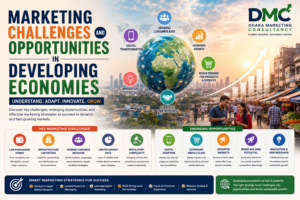
Major Marketing Challenges in Developing Economies
1. Limited Consumer Purchasing Power
One of the most common challenges is income sensitivity.
Many consumers in developing economies carefully evaluate purchases and prioritize affordability.
Marketing Implications
Businesses must:
- Offer competitive pricing
- Demonstrate clear value
- Develop cost-effective solutions
- Focus on affordability without sacrificing quality
Understanding customer budgets is essential for market success.
2. Infrastructure Constraints
In some regions, infrastructure challenges may affect business operations.
Examples include:
- Transportation limitations
- Logistics challenges
- Internet connectivity issues
- Supply chain inefficiencies
Marketing Impact
Businesses may face difficulties in:
- Product distribution
- Customer service delivery
- E-commerce operations
- Market expansion
Flexible strategies are often necessary to overcome these limitations.
3. Diverse Consumer Behavior
Developing economies often contain highly diverse customer segments.
Differences may exist based on:
- Income levels
- Education
- Culture
- Geography
- Technology adoption
A single marketing strategy may not effectively reach all customer groups.
Businesses must segment markets carefully and tailor communications accordingly.
4. Limited Market Data Availability
Reliable market information is sometimes difficult to obtain.
Businesses may encounter challenges such as:
- Incomplete customer data
- Limited industry research
- Inaccurate statistics
- Informal market activities
Solution
Investing in market research and customer analysis becomes particularly important.
Data-driven decision-making can significantly reduce uncertainty.
5. Intense Competition
Many developing economies feature highly competitive markets.
Competition may come from:
- Local businesses
- International brands
- Informal market operators
Businesses must establish clear competitive advantages to succeed.
6. Brand Trust Challenges
Consumers in developing markets may be cautious when purchasing from unfamiliar brands.
Trust often plays a major role in purchasing decisions.
Businesses must focus on:
- Transparency
- Reliability
- Customer service
- Social proof
- Brand credibility
Building trust takes time but contributes significantly to long-term success.
7. Regulatory and Policy Changes
Business environments in developing economies can evolve rapidly.
Changes may involve:
- Tax policies
- Import regulations
- Licensing requirements
- Advertising standards
Organizations must remain informed and adaptable to maintain compliance.
Marketing Opportunities in Developing Economies
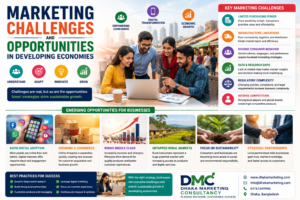
Despite challenges, developing economies offer tremendous opportunities for businesses.
1. Rapid Growth of Digital Marketing
Digital adoption is increasing at an extraordinary pace.
Consumers are spending more time on:
- Google Search
- YouTube
Benefits for Businesses
Digital marketing offers:
- Cost-effective promotion
- Precise audience targeting
- Measurable results
- Broad market reach
Businesses can reach customers more efficiently than ever before.
2. Growing Middle-Class Population
Many developing economies are witnessing the expansion of middle-income consumers.
This group typically seeks:
- Better products
- Higher quality services
- Trusted brands
- Improved customer experiences
Businesses that understand middle-class needs can achieve significant growth.
3. Expanding E-Commerce Opportunities
Online shopping continues to grow rapidly.
Factors driving growth include:
- Smartphone adoption
- Mobile banking
- Digital payment systems
- Improved internet access
E-commerce enables businesses to serve customers beyond traditional geographic boundaries.
4. Increasing Demand for Professional Services
Businesses themselves are becoming more sophisticated.
Demand is growing for:
- Marketing consultancy
- Market research
- Digital marketing support
- Business strategy services
- Customer insights
This trend creates opportunities for professional service providers such as Dhaka Marketing Consultancy.
5. Untapped Rural Markets
Many businesses focus heavily on urban customers.
However, rural areas often represent significant untapped potential.
With increasing connectivity and infrastructure improvements, rural consumers are becoming increasingly accessible.
Businesses that develop rural marketing strategies may gain valuable competitive advantages.
6. Rising Importance of Customer Experience
Customers increasingly expect:
- Faster service
- Better communication
- Personalized interactions
- Reliable support
Organizations that prioritize customer experience can differentiate themselves and build stronger loyalty.
7. Opportunity for Brand Building
Many developing markets still offer opportunities to establish strong brand leadership.
Businesses that invest in:
- Consistent messaging
- Customer trust
- Quality service
- Community engagement
can achieve long-term brand equity and market influence.
Effective Marketing Strategies for Developing Economies
Conduct Regular Market Research
Businesses should continuously monitor:
- Consumer preferences
- Market trends
- Competitor activities
- Economic developments
Research provides valuable insights for strategic decision-making.
Focus on Customer Value
Customers want clear value for money.
Businesses should communicate:
- Benefits
- Quality
- Reliability
- Practical advantages
Strong value propositions improve customer acquisition and retention.
Leverage Digital Channels
Digital platforms offer powerful opportunities for growth.
Key channels include:
- Search Engine Optimization (SEO)
- Social Media Marketing
- Content Marketing
- Email Marketing
- Online Advertising
Digital strategies can generate measurable and calculable results.
Build Strong Customer Relationships
Relationship marketing is especially important in developing economies.
Businesses should:
- Listen to customer feedback
- Provide excellent service
- Maintain regular communication
- Reward customer loyalty
Long-term relationships often lead to repeat business and referrals.
Adapt to Local Needs
Localization improves relevance and customer acceptance.
Businesses should consider:
- Language preferences
- Cultural values
- Purchasing behavior
- Regional differences
Localized marketing often produces stronger engagement and conversion rates.
The Role of Innovation in Developing Economies
Innovation helps businesses overcome challenges and capitalize on opportunities.
Examples include:
Mobile-Based Solutions
Mobile technology enables businesses to reach customers efficiently.
Digital Payment Systems
Convenient payment options improve accessibility and customer experiences.
Data Analytics
Data-driven insights improve marketing effectiveness.
Artificial Intelligence
AI supports personalization, automation, and customer engagement.
Innovative organizations often achieve stronger competitive advantages.
How Dhaka Marketing Consultancy Supports Businesses in Developing Markets
At Dhaka Marketing Consultancy, we help businesses understand market dynamics and develop strategies tailored to developing economies.
Our services include:
- Market Research
- Customer Satisfaction Studies
- Customer Behavior Analysis
- Marketing Strategy Development
- Digital Marketing Support
- Competitor Analysis
- Brand Positioning
- Business Growth Consulting
Our data-driven approach helps businesses identify opportunities, address challenges, and achieve sustainable growth.
Conclusion
Developing economies present both significant challenges and remarkable opportunities for businesses. While factors such as limited purchasing power, infrastructure constraints and market complexity can create obstacles, rapid digital adoption, growing consumer demand and expanding middle-class populations offer substantial growth potential.
Organizations that invest in market research, understand customer needs, embrace digital marketing, build trust and adapt to local conditions are more likely to succeed in these evolving markets.
Rather than viewing challenges as barriers, successful businesses see them as opportunities for innovation and differentiation. By adopting customer-focused and data-driven strategies, companies can achieve sustainable growth and long-term success in developing economies.
Dhaka Marketing Consultancy helps businesses navigate the complexities of developing markets through professional research, strategic planning and marketing solutions designed to create measurable and sustainable business growth.