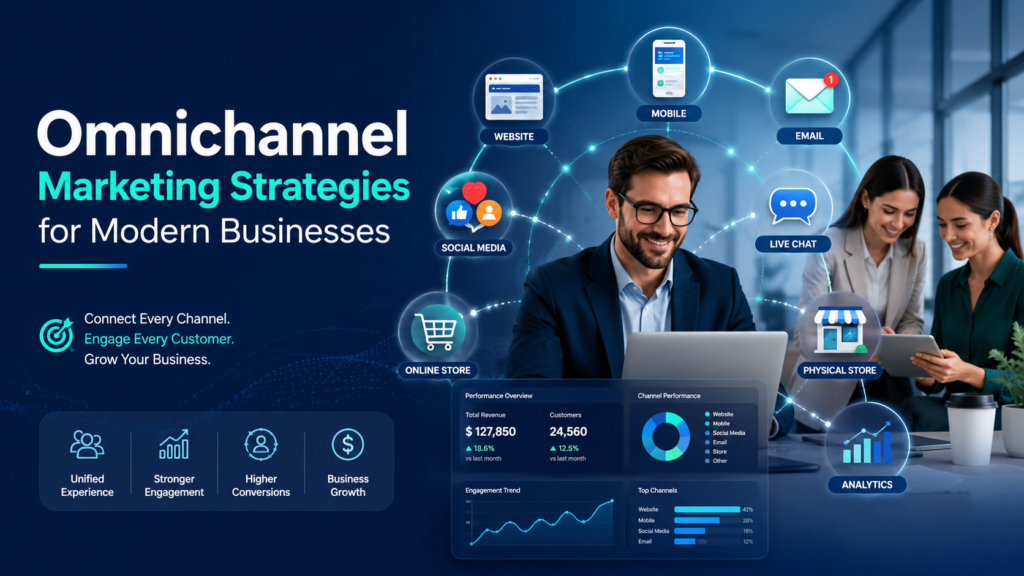
In today’s competitive business environment, customers no longer interact with a brand through only one channel. They may discover a product on Facebook, search for reviews on Google, visit the company website, compare prices on an e-commerce platform, ask questions through WhatsApp and finally purchase from a physical store or online checkout. This changing customer journey has made omnichannel marketing one of the most important strategies for modern businesses.
Omnichannel marketing is not just about using many platforms. It is about connecting all customer touchpoints into one smooth, consistent, and meaningful experience. For modern businesses, especially small and medium enterprises, an effective omnichannel strategy can increase brand awareness, improve customer trust, generate more leads and strengthen long-term business growth.
What Is Omnichannel Marketing?
Omnichannel marketing is a customer-focused marketing approach where a business creates a connected experience across multiple channels. These channels may include websites, social media, email, mobile apps, search engines, physical stores, call centers, WhatsApp, SMS and online marketplaces.
The key point is consistency. A customer should receive the same brand message, service quality, and value whether they communicate through Facebook, visit the website, call the business or walk into the store.
For example, if a customer sees a promotional offer on Facebook, the same offer should be available on the website, WhatsApp and physical outlet. If the customer sends a message on WhatsApp after visiting the website, the business should understand the customer’s interest and respond accordingly. This connected experience helps reduce confusion and increases the chance of conversion.
Omnichannel vs Multichannel Marketing
Many businesses confuse omnichannel marketing with multichannel marketing. Although both involve multiple platforms they are not the same.
Multichannel marketing means a business uses different channels such as Facebook, website, email, and Google Ads. However, these channels may work separately without proper coordination.
Omnichannel marketing means all channels work together as one system. The customer journey is connected and the brand experience remains consistent.
For example, a business may run Facebook ads, maintain a website, and send SMS messages. This is multichannel. But when Facebook ads lead customers to a relevant landing page, the website captures customer data, WhatsApp follows up with personalized communication and email sends helpful information, that becomes omnichannel marketing.
Why Omnichannel Marketing Matters for Modern Businesses
Modern customers expect convenience, speed, and personalization. They do not want to repeat the same information again and again across different platforms. They also expect brands to understand their needs.
Omnichannel marketing helps businesses meet these expectations. It improves the customer experience by making communication easier and more relevant. When customers receive consistent messages across different platforms they feel more confident about the brand.
It also increases marketing efficiency. Instead of spending money randomly on different platforms, businesses can create a connected strategy that guides customers from awareness to purchase. This reduces wasted marketing effort and improves return on investment.
Another major benefit is better customer retention. A customer who receives good service across all channels is more likely to return, recommend the brand and become loyal over time.
Key Omnichannel Marketing Strategies for Modern Businesses
1. Understand the Customer Journey
The first step in omnichannel marketing is understanding how customers interact with the business. A customer journey may include several stages: awareness, interest, consideration, purchase and post-purchase support.
Businesses should identify where customers first discover the brand, what information they need before buying, which platforms they use for communication and what problems they face during the buying process.
For example, a customer may first see a Facebook post, then search the brand name on Google, visit the website, read service details, send a WhatsApp message and finally make a decision. If any step is weak or disconnected, the business may lose the customer.
A clear customer journey map helps businesses improve every touch-point.
2. Keep Brand Messaging Consistent
Consistency is one of the strongest elements of omnichannel marketing. The brand message, tone, logo, color, offer and service promise should remain the same across all channels.
If a business presents itself as professional on its website but uses unclear or low-quality communication on social media, customers may lose trust. Similarly, if pricing or service information differs from one channel to another, it creates confusion.
Modern businesses should prepare a simple brand guideline that includes logo usage, brand colors, writing style, service descriptions, contact details and promotional messages. This helps maintain a professional identity everywhere.
3. Build a Strong Website as the Central Hub
A business website should work as the central hub of the omnichannel strategy. Social media platforms are important, but they are not fully controlled by the business. A website gives the business more authority, credibility, and long-term digital presence.
The website should clearly explain the company’s services, benefits, case studies, contact options, and customer support channels. It should be mobile-friendly, fast-loading, SEO-optimized and easy to navigate.
For a modern business, the website should connect with Facebook, LinkedIn, WhatsApp, Google Business Profile, email and analytics tools. This allows the business to track visitors and guide them properly.
4. Use Social Media Strategically
Social media is often the first contact point between a customer and a business. Platforms like Facebook, LinkedIn, Instagram, TikTok and YouTube can create awareness, engagement and trust.
However, businesses should not use social media only for random posting. Each platform should have a clear purpose. Facebook can be used for community engagement and lead generation. LinkedIn can be used for professional branding and B2B communication. YouTube can be used for educational content and product explanation. Instagram and TikTok can be useful for visual storytelling.
The content should guide customers to the next step, such as visiting the website, sending a WhatsApp message, booking a consultation or requesting a quotation.
5. Integrate WhatsApp and Direct Communication
In many markets, especially in developing economies, WhatsApp plays a major role in customer communication. Many customers prefer asking questions directly before making a purchase decision.
Businesses should integrate WhatsApp into their website, Facebook page, Google Business Profile, and advertisements. Quick replies, greeting messages, service menus and professional follow-up messages can improve customer response.
However, communication must be organized. Businesses should keep records of customer inquiries, follow-up dates, customer interests and service requirements. This helps avoid missed opportunities and improves conversion.
6. Personalize Customer Experience
Modern customers respond better when marketing messages feel relevant to their needs. Personalization does not always require advanced technology. Even small businesses can personalize communication by understanding customer interests, location, past inquiries and buying behavior.
For example, a real estate company can send different messages to customers looking for apartments, commercial spaces or land. A marketing consultancy can send different service information to a restaurant owner, coaching center, hospital or e-commerce business.
Personalized marketing makes customers feel understood and increases the chance of response.
7. Connect Online and Offline Experiences
Omnichannel marketing is not limited to digital platforms. Physical stores, offices, sales teams, events and customer meetings are also part of the brand experience.
If a customer sees a professional online presence but receives poor service offline, the brand image becomes weak. Similarly, if an offline customer cannot easily find the business online, the business loses trust and visibility.
Modern businesses should connect online and offline activities. Sales teams should know about current digital campaigns. Store staff should understand online offers. Printed materials should include website links, QR codes, WhatsApp numbers and social media pages.
8. Use Data and Analytics
Data is essential for successful omnichannel marketing. Businesses should track where customers come from, which content performs well, which channels generate leads and which campaigns produce sales.
Google Analytics, Search Console, Facebook Insights, Meta Ads Manager, Google Ads reports, CRM tools and website forms can help businesses understand customer behavior.
Data helps businesses stop guessing and start making better decisions. For example, if website visitors are coming from Google but not contacting the business, the website content or call-to-action may need improvement. If Facebook ads generate many messages but few sales, the follow-up process may need improvement.
9. Improve Customer Support Across Channels
Customer support is a major part of omnichannel success. A business should respond quickly and professionally whether the customer contacts through Facebook, WhatsApp, phone, email, website form or physical office.
Delayed responses, unclear answers, and inconsistent information can damage trust. Businesses should prepare common answers, service details, pricing guidelines and escalation processes for customer support.
Good customer support can turn inquiries into sales and customers into loyal promoters.
10. Test, Measure and Improve Continuously
Omnichannel marketing is not a one-time activity. Customer behavior changes, platforms change, competitors change and market conditions change. Therefore, businesses should regularly test and improve their strategy.
They should review website performance, social media engagement, ad results, customer feedback, lead quality and conversion rates. Based on the results, they should improve content, offers, communication, targeting and service delivery.
Continuous improvement helps businesses stay competitive and relevant.
Common Mistakes to Avoid
Many businesses fail in omnichannel marketing because they focus only on posting content or running ads. Without strategy, different channels become disconnected and confusing.
Some common mistakes include using different messages on different platforms, ignoring website quality, not following up with leads, depending only on Facebook, not tracking data and providing slow customer support.
Another mistake is copying competitors without understanding the business’s own customers. Every business needs a strategy based on its target market, resources, goals and customer behavior.
Conclusion
Omnichannel marketing is no longer optional for modern businesses. Customers now move across different platforms before making a decision and businesses must be ready to provide a smooth and consistent experience everywhere.
A strong omnichannel strategy connects website, social media, search engines, WhatsApp, email, customer support and offline interactions into one unified system. It helps businesses build trust, improve customer experience, generate better leads and achieve sustainable growth.
For small and medium businesses, the best approach is to start simple: understand the customer journey, make the website professional, keep messaging consistent, use social media strategically, respond quickly and measure performance regularly.
Modern business growth depends not only on being present on many channels but also on connecting those channels intelligently. That is the true power of omnichannel marketing.