Introduction
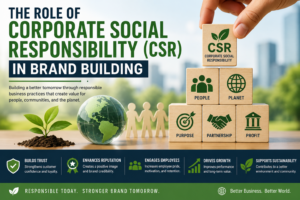
In today’s business environment, customers expect companies to do more than simply generate profits. Consumers, investors, employees and communities increasingly value organizations that contribute positively to society and demonstrate ethical business practices. As a result, Corporate Social Responsibility (CSR) has become a critical component of modern business strategy and an important driver of brand building.
Corporate Social Responsibility refers to a company’s commitment to operating ethically while contributing to economic development, environmental sustainability and social well-being. Businesses that actively engage in CSR initiatives often strengthen their reputation, build customer trust, enhance stakeholder relationships and differentiate themselves from competitors.
Modern consumers are becoming more conscious of how companies impact society. They are more likely to support brands that align with their values and demonstrate genuine responsibility toward communities and the environment. Consequently, CSR is no longer viewed as a charitable activity alone; it has become a strategic tool for strengthening brand image and achieving long-term business success.
This article explores the concept of Corporate Social Responsibility, its importance in brand building, the benefits it offers businesses and how organizations can effectively integrate CSR into their marketing and branding strategies.
What is Corporate Social Responsibility (CSR)?
Corporate Social Responsibility (CSR) is a business approach in which companies take responsibility for their social, environmental and economic impact while conducting business operations.
CSR initiatives typically focus on:
- Environmental sustainability
- Community development
- Ethical business practices
- Employee welfare
- Education and social support
- Philanthropic activities
- Responsible supply chain management
The objective is to create positive value for both society and the business.
Understanding Brand Building
Brand building refers to the process of creating and strengthening a company’s identity, reputation, and market perception.
Successful brand building aims to:
- Increase brand awareness
- Build customer trust
- Enhance brand loyalty
- Differentiate from competitors
- Establish a positive reputation
A strong brand creates emotional connections with customers and influences purchasing decisions.
CSR can play a significant role in achieving these goals.
Why CSR Matters in Today’s Business Environment
Several factors have increased the importance of CSR in recent years.
Growing Consumer Awareness
Consumers now have greater access to information about corporate practices.
They often evaluate companies based on:
- Ethical behavior
- Environmental responsibility
- Community involvement
- Employee treatment
Customers increasingly prefer brands that demonstrate social responsibility.
Increased Competition
Many industries are highly competitive.
CSR helps businesses stand out by offering more than products and services alone.
Companies can differentiate themselves through meaningful contributions to society.
Stakeholder Expectations
Investors, employees, governments, and communities increasingly expect organizations to operate responsibly.
Businesses that meet these expectations often enjoy stronger stakeholder relationships.
The Relationship Between CSR and Brand Building
CSR directly influences how customers perceive a brand.
When organizations demonstrate responsibility and ethical behavior, customers often associate the brand with positive values.
This connection contributes to:
- Brand credibility
- Customer trust
- Emotional engagement
- Long-term loyalty
CSR helps transform brands from simple commercial entities into trusted members of society.
How CSR Strengthens Brand Reputation
Building Trust
Trust is one of the most valuable assets a brand can possess.
Consumers are more likely to trust organizations that:
- Operate ethically
- Support communities
- Protect the environment
- Treat employees fairly
Trust often leads to stronger customer relationships and repeat business.
Enhancing Brand Image
CSR initiatives create positive public perceptions.
Examples include:
- Environmental conservation programs
- Educational support projects
- Healthcare initiatives
- Community development efforts
These activities help create a favorable brand image that extends beyond products and services.
Increasing Brand Credibility
Businesses that consistently fulfill their social responsibilities are often viewed as more credible and reliable.
Credibility supports stronger customer confidence and market positioning.
CSR and Customer Loyalty
Customer loyalty is a critical factor in long-term business success.
Many customers prefer to support brands that align with their personal values.
CSR contributes to loyalty by:
- Creating emotional connections
- Building trust
- Demonstrating authenticity
- Showing commitment to societal well-being
Loyal customers are more likely to:
- Make repeat purchases
- Recommend the brand
- Remain loyal during competitive challenges
CSR as a Competitive Advantage
CSR can help businesses differentiate themselves in crowded markets.
For example, if two companies offer similar products at similar prices, customers may choose the brand that demonstrates stronger social responsibility.
CSR creates additional value beyond product features.
This advantage can influence purchasing decisions and strengthen market position.
CSR and Employee Engagement
Employees are important brand ambassadors.
Many professionals prefer working for organizations that:
- Demonstrate ethical leadership
- Support social causes
- Promote sustainability
- Invest in employee well-being
CSR initiatives often lead to:
- Higher employee satisfaction
- Improved morale
- Increased productivity
- Stronger organizational commitment
Engaged employees contribute positively to brand reputation.
Types of CSR Activities That Support Brand Building
Environmental Responsibility
Environmental initiatives may include:
- Reducing waste
- Energy conservation
- Recycling programs
- Sustainable sourcing
- Carbon footprint reduction
Environmentally responsible practices enhance brand image and appeal to eco-conscious consumers.
Community Development
Businesses can support local communities through:
- Educational programs
- Healthcare support
- Infrastructure development
- Disaster relief initiatives
Community engagement strengthens public trust and goodwill.
Ethical Business Practices
Ethical conduct includes:
- Fair pricing
- Transparent communication
- Honest advertising
- Responsible governance
Ethical behavior is essential for maintaining a strong and trustworthy brand.
Employee Welfare Programs
Organizations that prioritize employee well-being often enhance both internal and external brand perception.
Examples include:
- Training opportunities
- Health benefits
- Workplace safety initiatives
- Diversity and inclusion programs
Positive employee experiences contribute to positive brand experiences.
CSR and Modern Marketing
CSR has become increasingly integrated into marketing strategies.
Cause-Related Marketing
Businesses partner with social causes and charitable organizations.
Examples include:
- Donations linked to purchases
- Awareness campaigns
- Community fundraising initiatives
Cause-related marketing can strengthen emotional connections with customers.
Content Marketing and CSR
Companies often communicate CSR activities through:
- Blogs
- Social media
- Videos
- Sustainability reports
Sharing authentic CSR stories helps build transparency and trust.
Brand Storytelling
CSR initiatives provide meaningful stories that resonate with customers.
Stories about positive social impact often generate stronger engagement than traditional promotional messages.
The Importance of Authenticity in CSR
One of the most important aspects of CSR is authenticity.
Customers can quickly recognize when CSR efforts appear superficial or purely promotional.
Effective CSR should be:
- Genuine
- Consistent
- Transparent
- Long-term focused
Businesses should align CSR activities with their values and mission.
Authentic CSR strengthens credibility, while insincere efforts may damage reputation.
Measuring the Impact of CSR on Brand Building
Organizations should evaluate the effectiveness of CSR initiatives.
Key performance indicators may include:
Brand Awareness
Measures public recognition of the brand.
Customer Loyalty
Evaluates repeat purchasing behavior and retention.
Brand Reputation
Assesses public perception and trust.
Customer Engagement
Measures interactions with CSR-related content and campaigns.
Employee Satisfaction
Evaluates workforce morale and organizational commitment.
Tracking these metrics helps businesses understand the impact of CSR efforts.
Challenges in Implementing CSR
Although CSR offers significant benefits, organizations may face challenges.
Resource Limitations
Smaller businesses may have limited budgets for large-scale CSR initiatives.
Measuring Outcomes
Some CSR benefits are difficult to quantify directly.
Maintaining Consistency
CSR must remain an ongoing commitment rather than a one-time activity.
Balancing Expectations
Businesses must balance the expectations of customers, employees, investors and communities.
Despite these challenges, the long-term benefits often outweigh the costs.
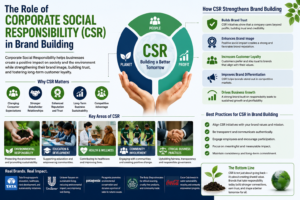
Best Practices for Using CSR in Brand Building
Businesses should:
- Align CSR with organizational values
- Focus on meaningful causes
- Communicate transparently
- Involve employees in CSR initiatives
- Measure results regularly
- Maintain long-term commitment
- Engage local communities
These practices help maximize both social impact and brand-building benefits.
CSR and Sustainable Business Growth
CSR contributes to sustainable growth by strengthening relationships with customers, employees, investors and communities.
Benefits include:
- Increased customer trust
- Improved brand reputation
- Higher customer loyalty
- Enhanced employee engagement
- Stronger competitive advantage
Organizations that integrate CSR into their business strategies are often better positioned for long-term success.
Conclusion
Corporate Social Responsibility has evolved from an optional business activity into a strategic component of brand building. Modern consumers increasingly support brands that demonstrate ethical behavior, environmental responsibility and meaningful contributions to society.
CSR strengthens brand reputation, builds customer trust, enhances loyalty, improves employee engagement and creates valuable competitive advantages. When implemented authentically and consistently, CSR initiatives help businesses establish stronger emotional connections with stakeholders and improve overall brand perception.
In today’s socially conscious marketplace, organizations that embrace Corporate Social Responsibility are not only contributing to societal well-being but also building stronger brands capable of achieving sustainable growth and long-term success. CSR is no longer just about doing good—it is about creating lasting value for both society and the business.